OpEd: What Five Years of Catalyzing Career-Connected Learning Means for the Future of Education and Work
Reflections on five years of impact
Dr. Michelle Cheang
Director, Catalyze
In my years leading schools and working alongside district teams, I rarely left a room with clean answers. More often, we left with better questions about what students truly need, what systems are designed to do, and where the gaps persist. That habit of questioning has stayed with me.
When Catalyze began in 2021, I saw it as a way to bring greater coherence and momentum to career-connected learning. Five years later, that work has become less about having the answer and more about listening closely, asking better questions, and continually defining where we can be most useful within a broader ecosystem.
Education programs that connect learners to career-ready skills are not new. But these efforts have often been limited in reach and depth, leaving many students without consistent access to integrated experiences that connect learning to real-world opportunities before they graduate. The challenge in front of us is not whether this work matters. It’s how we continue strengthening it: accelerating new models, deepening employer partnerships, and ensuring these opportunities reflect the realities learners and workers face today.
Today, that narrative is shifting. Conversations now center on career exploration, earn-and-learn models, and skills-based hiring. Learners are asking different questions about purpose, adaptability, and how to navigate a world that keeps changing beneath their feet.
This shift didn't happen by accident. It happened because educators, communities, employers, and philanthropy recognized the flaws in how we had drawn the line between education and work and came together to try something different. Catalyze is building on decades of work led by individuals and organizations who have long advanced career-connected learning, often without the visibility or coordination it deserves.
Five years, 65 initiatives, and more than 63,000 learners later, Catalyze has learned that what matters more than any single credential or pathway is whether young people have the agency and resilience to adapt as the world changes around them. In an era increasingly shaped by artificial intelligence, adaptability and human connection will matter more than ever.
The Catalyze Challenge has never been about whether career-connected learning works. We know it does. The question is how to make it work for all young people and how to better connect the systems, partnerships, and opportunities that support them. While career-connected learning has long demonstrated impact, it has not yet been fully realized at scale.
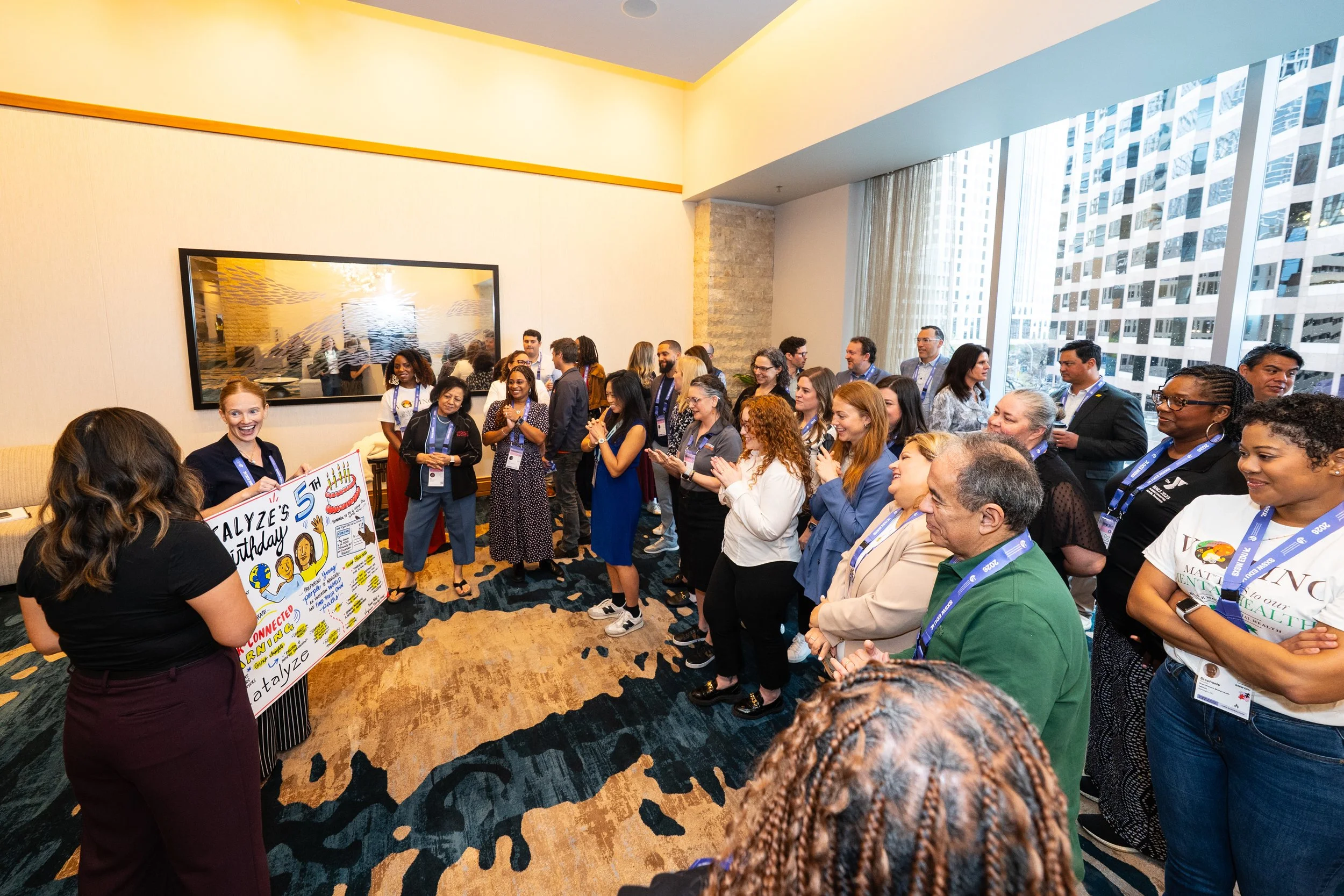


Here's what five years of catalyzing career-connected learning has shown us and what we believe it means for the future of education and work:
1. Career-connected learning expands learner agency and access to diverse pathways.
The most significant shift in the field has been away from the idea of a single promising path to a meaningful career, toward a recognition that multiple pathways exist within a broader ecosystem of opportunity. Catalyze grantees have launched innovative career-connected learning programs spanning everything from career exploration to work-based learning. But diversity of options alone is not enough. Strong cross-sector collaborations and robust networks are equally essential because they equip learners with the awareness and agency to understand what paths exist and the confidence to pursue one. What the field is learning, and what Catalyze’s grantees continue to surface, is that pathways must be both diverse and navigable to promote equitable economic outcomes. Too often, they remain siloed across systems in ways that limit access and cohesion.
2. Collaboration is a force multiplier
From the start, Catalyze was built as a collaborative funding effort, grounded in the belief that the philanthropic community can deepen its impact by working together. Over five years, we have mobilized resources and influence to ensure that learners ages 11–22 have access to transformative career-connected learning opportunities that help them explore possibilities, build durable skills, and navigate their futures. That commitment remains central to Catalyze's model as we enter our next five years by expanding our funder base and engaging new partners to advance the future of career-connected learning.
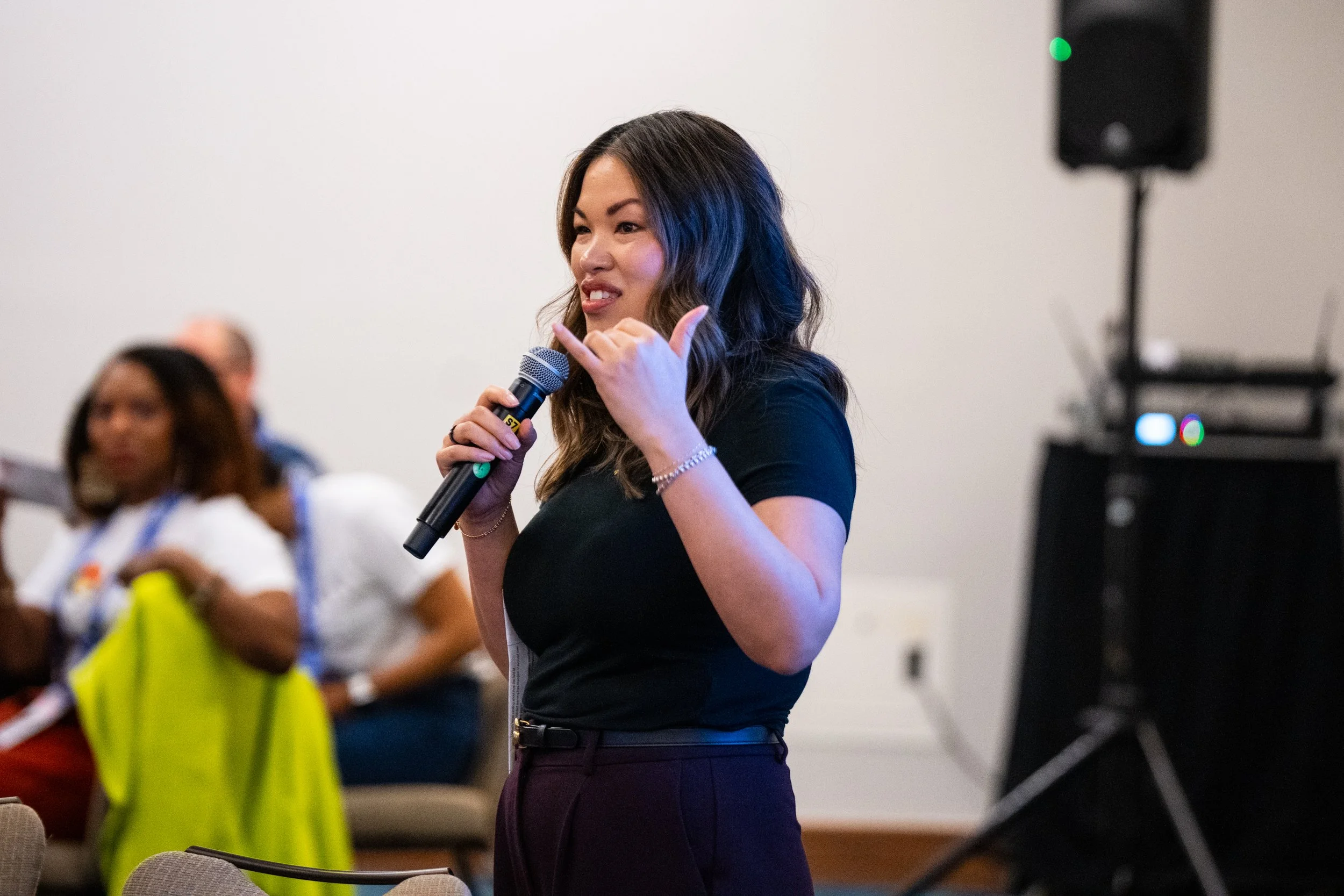
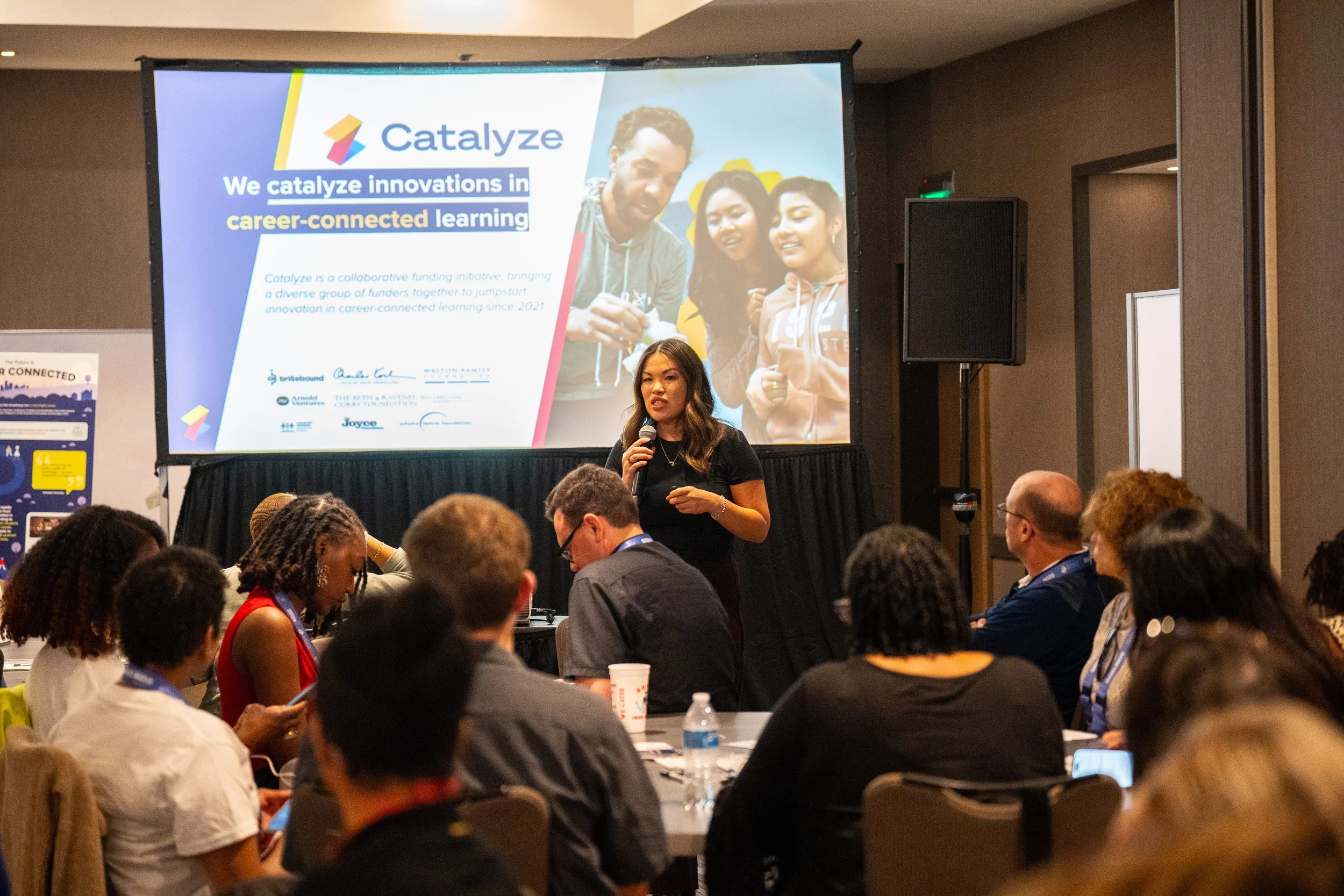
But collaboration extends beyond pooled funding. For us, it is not a one-time partnership, but an ongoing effort toward ecosystem alignment and shared learning experiences through our Community of Practice programming. Our Community of Practice connects innovators across geographies, accelerating learning and strengthening the field as a whole. As grantees made clear at SXSW EDU, no one is doing this work alone. There is an active constellation of past, current, and future grantees learning from and building on one another. The next phase of career-connected learning will demand even more of this: the connections, shared vision, and collective momentum that healthy ecosystems require.
3. Balancing innovation and scale.
Catalyze launched as an innovation engine, funding bold solutions in career-connected learning. That remains core to our mission. But we also recognize the natural drive toward scale that emerges when innovation works, along with the important questions that follow about how to bring what's working to more places and more people.
To explore how promising models can grow without losing what makes them effective, we intentionally leaned into scale for Round Four of the Catalyze Challenge, investing in a smaller cohort of organizations already working to expand transformative, direct-service career-connected learning solutions.
What we learned is that scaling doesn’t have to mean replicating the same model everywhere. Innovation is often deeply contextual. What works in a rural community won’t necessarily work in an urban one, and vice versa. The goal is not replication of models, but replication of the principles of career-connected learning and the enabling conditions behind them: meaningful learner voice, employer engagement, cross-sector alignment, a clear path to sustainability, and a commitment to building ecosystems.
For Round 5, we returned our focus to early-stage innovation with a new two phase awardee process: selecting incubation awardees to strengthen bold new approaches to CCL, then funding the most promising solutions to implement their program during a full school year. Incubation awardees offer strong potential for scale, and are focused on career exploration for young adolescents and meaningful work-based learning through employer partnerships. We look forward to supporting these awardees through the incubation phase and continuing to refine the the best ways to nurture organizations across various stages of growth.
“If we want millions more learners across the country to benefit, and we do, we must invest not only in new ideas, but in the support and structures that allow them to grow at the right pace, in ways that work for their contexts.”
4. Employers must be co-designers.
Employers must be active partners in designing and delivering learning experiences that reflect real workforce needs. That's why so many Catalyze-supported initiatives embed employer engagement into their core strategy by connecting learners to paid work experiences, mentorship, and industry-aligned credentials.
When employers co-design learning, whether in rural communities, urban centers, or mid-sized cities, learners gain experiences that build transferable skills and open real pathways to work. And it's in employers' interest too. As businesses across industries face talent shortages and skills gaps, engaging earlier in middle and high school allows them to help shape talent pipelines while strengthening the communities they depend on. Ultimately, employer engagement is not just about filling jobs. It is about helping young people build skills, social capital, confidence, and a sense of possibility in a rapidly changing economy.
5. Economic mobility requires more than access.
For decades, the prevailing focus was on access: access to education, to college, and to credentials. And we know access matters. But what happens once learners have it matters just as much. The imperative now is to ensure opportunities are not isolated moments, but part of a coherent, connected journey where learner outcomes are understood across systems and across the services and programming that shape their path.
National data indicates that fewer than 30% of Gen Z learners believe their school prepares them for the workplace. Catalyze learners report a very different experience. A survey of more than 1,400 learners in Catalyze programs found that 77% gained skills and knowledge they expect to help them succeed in their current or future careers, and 84% felt confident in their ability to achieve the goals they set for themselves.
These numbers reflect something deeper than program outcomes. High-quality career-connected learning experiences help learners build confidence, refine their interests, and develop skills that translate to the real world. Learners have also told us directly that one of the most valuable parts of their experience was learning how, and when, to pivot. Taken together, this suggests that career-connected learning is filling critical gaps in how education prepares young people for genuine economic mobility.
What Comes Next
We can't know exactly what the future of work will look like. But we know that career-connected learning is central to preparing young people for a world increasingly defined by both disruption and opportunity. We know that young people thrive when they see purpose in their learning. And we know that communities are stronger when education and industry are aligned.
The past five years have shown us that change is possible. The next five will require continued investment from philanthropy, educators, innovators, and employers who are committed not only to expanding opportunity, but to listening, adapting, and helping more young people build the skills, agency, and connections needed to navigate whatever future comes next.