Building Mutually Beneficial Programs for Learners and Employers
This is a two-part blog series. After reading part I, you’re invited to take a closer look at how these partnerships formed by reading part II of our blog series, a Q&A with grantees and their partners.
Much like a learner’s own career journey, developing partnerships with employers isn’t a straight line from point A to point B. It requires trial and error—zigs and zags as programs test and refine. We connected with Catalyze grantee leaders from organizations across the country—Educate Texas, The New Trade Program, and Project Success—to dive deeper into how they approached building strong employer partnerships:
Educate Texas learners participated in paid internships at Ascension Seton Medical Center, developing firsthand health care skills that built on high school CTE coursework.
New Trade learners gained digital marketing and cybersecurity skills by studying relevant curricula and supporting small and large businesses with web design, social media marketing, and more.
Project Success learners in Minnesota earned Certified Nursing Assistant (CNA) credentials by studying at a local community college and gaining hands-on work experience as interns at Oak Terrace Senior Living.
Although each program looks different on paper, key similarities emerged in how they successfully piloted work-based learning experiences that equipped learners with meaningful skills. Each program shared a common theme: that strong employer partnerships grow from responsive programs that evolve alongside the needs of both learners and employers, grounded in mutual benefit and changing employers’ perceptions about young people.
Providing value for employers
While student learning remained front and center in each internship program, grantees recognized that employer engagement is strongest when employers also gain clear value.
Salim Holder of The New Trade Program designed training curricula for learners directly around the skills employers seek. He noted, “The technical skills in marketing and cybersecurity are always changing. What employers are really looking for, and what our program offers, is not just that someone has heard about those skills, but that they’ve had a chance to actually use them.”
At the same time, New Trade learners worked on real digital marketing campaigns for small businesses that needed support in growing their brand visibility. Learners delivered measurable business results, increasing their social media engagement, click-through rates, and conversions. Employers weren’t being asked to host learners out of goodwill alone; they were gaining skilled employees, capacity, and fresh perspectives alongside business results.
Career-connected learning programs also provide real value to employers who face talent gaps and need to develop their hiring pipelines. In Central Texas, Educate Texas worked with Ascension Seton to respond to a clear workforce need, coordinating paid internships for more than 200 learners. The experience helped the health care center grow its pool of future hires and gave students real on-the-job exposure.
Drew Hood of Oak Terrace Senior Living, one of Project Success’ employer partners, faced similar hiring challenges:
“We have a workforce crisis coming up in long-term care, because we are not going to automate our way out of needing caregivers. We’re always hiring because we’re always going to have turnover.”
Together, these examples highlight that when employers recognize the long-term value of developing young people—filling talent gaps and building their hiring pipelines—they become committed partners in building career-connected learning programs.
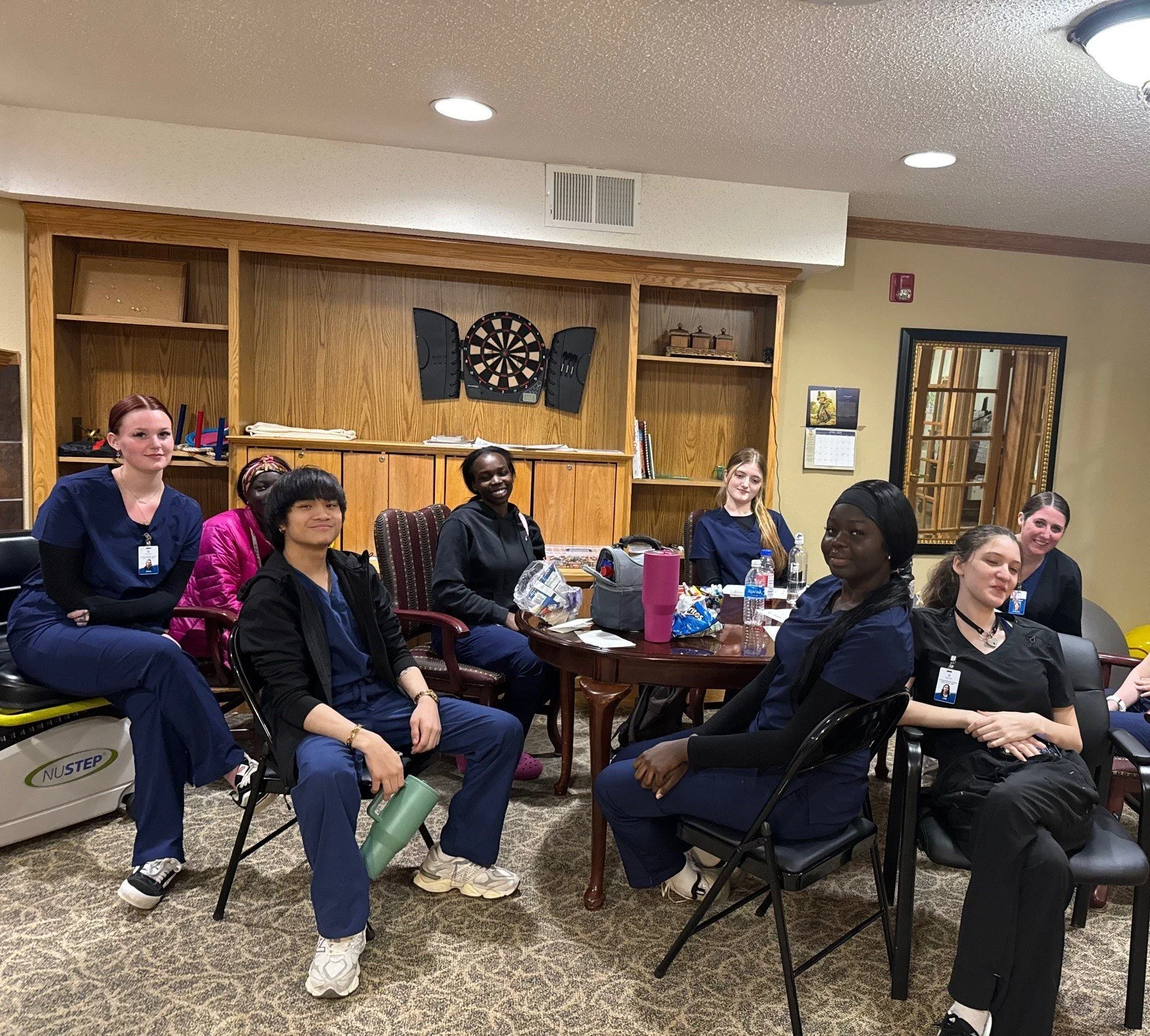
CNA Program Participants with Project Success (Minnesota)
Real-World Benefits for Learners
Learners who participated in the Educate Texas, New Trade, and Project Success partnerships gained real-world work experience they could add to their resumes, explored potential career paths, built their professional networks, and grew durable skills.
New Trade learners didn’t just learn how to run Facebook ads; they received growth-oriented feedback from their supervisors, recommendations for future roles, and practice working on a team.
Adeck, a learner who participated in Project Success’ CNA career pathway program, shared that the experience provided clinical experience, fundamental skills for working in health care, and dual college credit. Adeck shared, “Not only am I being offered an internship to continue my hands-on learning, but my course was fully paid for, which isn’t something a lot of schools offer. Becoming a CNA is a great first step for those interested in stepping into the medical field.”
The internship proved transformational for Dahlia, an Educate Texas learner who worked at Ascension Seton and hopes to stay in the field. She said she was grateful for the opportunity, knowing that many students in her community don’t often have access to experiences like this.
“I’ve already grown so much working here. I’m really just grateful that Ascension took a chance on me. In a way, I’m happy to be able to give back.”
Busting Myths for Employers
Strengthening mutual benefit sometimes requires helping employers understand what learners are capable of. Monica Jones Prewitt, Ed.D., Programs for Success and Completion at Educate Texas, emphasized that “mythbusting” is often necessary to demonstrate the benefits of working with young people and what they’re capable of.
Prewitt noted, “We are witnessing a generation that has access to so much information. They already have much more awareness than we traditionally think students have. With that, we have to honor what learners are doing outside of the classroom, listen to their voices, and recognize that they have expertise.”
And yet, employers are critical to bringing these work-based learning opportunities to life for learners.
“Students cannot do it alone—they need partnerships so that we can guide youth into better careers.”
Across all three organizations, elevating learners’ strengths and centering employers’ needs allowed everyone to benefit from the partnerships—creating career-connected learning models that are responsive to employer needs and impactful for the young people they serve.
To continue with the series, read part II of our blog.